
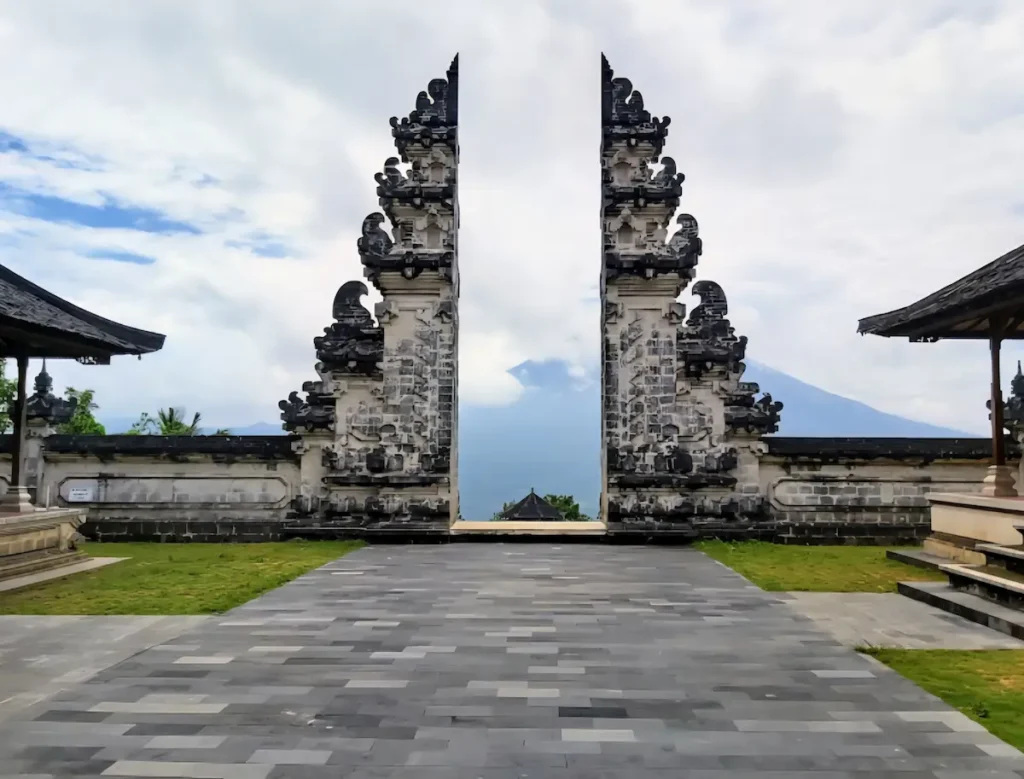
A Sacred Temple with Ancient Roots
Lempuyang Temple, officially known as Pura Lempuyang Luhur, is one of Bali’s oldest and most revered temples. Local tradition connects its origins to the 11th century, during the era of Mpu Kuturan. As part of the Sad Kahyangan (the “six sanctuaries of the world”), it holds immense spiritual importance for Balinese Hindus.
How Did Lempuyang Temple Become Known as the “Gate of Heaven”?
For centuries, Lempuyang Temple was primarily a place of worship. The nickname “Gate of Heaven” is a modern phenomenon, born in the age of social media.
It is believed to have started when a traveler visited during the rainy season, and water pooled in front of the temple’s split gate (candi bentar). The puddle created a stunning mirror-like reflection of Mount Agung framed perfectly by the temple gate. When this photo was shared, it caught international attention. Soon after, visitors and influencers began traveling to Lempuyang specifically for this iconic shot.
By the mid-2010s, Instagram fueled its popularity, and between 2017–2019, the temple became one of Bali’s most photographed landmarks. International media even reported on the phenomenon, cementing the name “Gate of Heaven” as part of Bali’s global tourism identity.
The Viral Photo Illusion
As demand for the “perfect shot” grew, local photographers found creative ways to recreate the reflection even when no puddle was present. The most famous trick? Using a small mirror placed under the camera lens, producing an illusion of a water reflection. While many tourists believed there was a magical lake at the gate, in reality, it was a clever photography technique that went viral around 2018–2019.
Tourism Boom and Cultural Challenges
The viral fame brought both opportunities and challenges.
Opportunities: Lempuyang became a must-visit on many Bali itineraries, supporting local guides, transport, and tourism businesses.
Challenges: Long waiting lines (sometimes 1–3 hours) formed as visitors queued for photos. This raised concerns about overcrowding and the balance between cultural respect and tourism demand.
Tips for Visiting Lempuyang Temple
Best Time to Visit: Arrive before sunrise or as early as possible to avoid long lines and to capture Mount Agung clearly before clouds roll in.
Respect the Temple: This is an active place of worship. Wear a sarong and sash (provided at the entrance), dress modestly, and be mindful of ceremonies.
Photography Etiquette: Respect locals and other visitors. Don’t block prayer activities or enter restricted areas just for photos.
Check Ceremony Dates: During major temple ceremonies, parts of the temple may be closed to tourists. Always have an alternative plan, such as visiting nearby Taman Ujung or Tirta Gangga.
Go with a Local Guide: A knowledgeable Balinese guide can explain cultural meanings, help with photography, and ensure a respectful visit. For the best experience, join our Bali: Most Iconic Instagram Tour(All-Inclusive) — where you’ll visit the famous Gate of Heaven at Lempuyang Temple, along with Tirta Gangga, a jungle swing, waterfalls, and Bali’s scenic rice terraces.
Conclusion
Lempuyang Temple’s transformation into the “Gate of Heaven” is a fascinating story of tradition meeting modern trends. Rooted in Balinese spirituality for centuries, its global fame began only after a rainy-season photo revealed a magical reflection of Mount Agung. Amplified by Instagram and international media, the temple became an icon of Bali’s beauty — and a reminder of how a single image can change the destiny of a place.
👉 At Aventuria Bali, we offer exclusive early-morning private tours to the Gate of Heaven. Our local guides will help you avoid the crowds, capture unforgettable photos, and share the cultural stories behind this sacred temple.